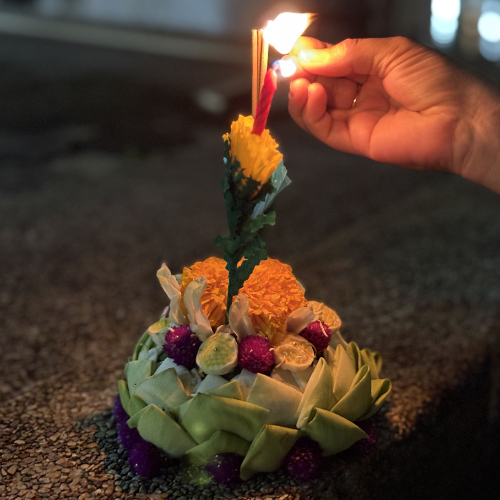
What better way to beat the summer heat than by engaging in harmless ‘water fights’? Add a festival to the mix and voila! – You’ve got yourself an aqua-infused fiesta. Recently, we had the opportunity to witness this revelry called “Songkran”, the water festival.
‘Songkran’ is the traditional Thai New Year Festival, celebrated across Thailand from the 13th to the 15th of April. It marks a period of new beginnings, reflection, and purification. That is why water, symbolising cleansing and renewal, plays a central role in the celebrations.
Meaning
‘Songkran’ is derived from the Sanskrit word “Saṅkrānti” (संक्रान्ति), referring to a transition or change. Specifically, it refers to the transmigration of the sun from one zodiac to another. Beyond astronomy, ‘Songkran‘ signifies a spiritual and personal transition—a time to leave behind the past and embrace renewal, purification, and goodwill.
Maha Songkran
According to the ancient solar calendar, the first day of the festival – 13th of April – known as ‘Maha Songkran’, marks the sun’s transition into Aries, a moment considered highly auspicious. ‘Maha’, meaning grand, signifies the importance of this day, which is celebrated as Maha Songkran Day.
It is a day focused on religious and cultural rituals, such as cleaning houses, visiting temples, and making food offerings to Buddhist monks. In addition to these practices, images of Lord Buddha are sprinkled with scented water as an act of reverence and purification.
People of all ages participate in building beautiful sand structures called ‘Sand pagodas’. These are found around temples, riverbanks, and beaches. Sand pagodas are small stupa-like structures decorated with colourful flags, flowers, and incense sticks. In some areas, contests are organised to determine the best sand pagoda.
Elder Day
The third day of Songkran – 15th April – is observed as ‘Elder Day’. On this day, water is gently poured on the hands of elder family members as a gesture of respect, care, and gratitude. Many people travel from cities to their hometowns to seek blessings from their elders on this day.
Dressing for the occasion
The week of Songkran is all about colourful clothing, especially vibrant flower-printed shirts and dresses.
Our experience
Finding the right outfit wasn’t too hard; finding the right size and fit was a different ball game. I had to visit several shops before I got my hands on something that fit – and it definitely wasn’t one of those ‘one size fits all’ options! They clearly don’t!
This little expedition stretched late into the night before the festival. The city — abuzz with last-minute shoppers(just like me), small musical gatherings, and the occasional splash of water — made the shopping experience unexpectedly entertaining.
Fully equipped (sartorially), we were ready and eager to immerse ourselves in the festivities of the coming days.
Let the celebrations begin !
As if on cue, the first day of the festival turned out to be extremely sunny. We put on our flowery gear and headed straight to one of the city’s main hubs — Siam Center. The streets were filled with throngs of excited revellers as we crawled our way to the entry gates. Once there, we were at the mercy of the queue and the music, letting them guide us wherever they pleased.
The merry mob was surprisingly orderly, even though the place was packed. People enjoyed splashing water, without discomforting anyone. Elders and unwilling participants were respectfully spared. The floors were cleaned at regular intervals to avoid slips and injuries. The structured atmosphere owed itself to the fact that this was a family-friendly space, and we were still in the early hours of the festival. I bet the party streets, with a much younger and more enthusiastic crowd, had an entirely different vibe.
The pulse of Thailand is its street food (duh!), and there was no shortage of it! An endless variety of dishes and beverages tempted us at every turn. The sun, the music and the refreshing water stirred our hunger, and we happily indulged ourselves.
Many samples later, as we hit our food limit — satisfied, content, and in an immobile stupor — it was time to wrap up the adventure. A short train ride, and we were back at our cosy abode, ready to relax and soak in the memories of the day.
The second day of Songkran was spent exploring the peripheries of the city on four wheels. This ended up being a risky endeavour as we found ourselves caught in plenty of unexpected water splashes. The adventure was cut short, and we safely returned home.
On the third and final day of Songkran, the rain gods decided to join the festivities — showering the city with their blessings. Due to the incessant downpour, we had to cancel our plans to visit the Maha Songkran festival at Sanam Luang — the city’s main cultural event organised by the Tourism Authority of Thailand. This event featured a grand parade, static float displays, and a variety of activities, including music, a drone light show, cultural performances, and, obviously, a Thai food market.
Perhaps next year!
Having celebrated the famous festival of colours, ‘Holi’, in India, the experience of ‘Songkran’ felt familiar. While ‘Holi’ is known for throwing colored powders and water, symbolizing joy and unity, the spirit of Songkran was equally vibrant.
This prompted me to explore other water festivals celebrated worldwide. It was fascinating to learn that several countries share similar traditions. Most of these festivals are rooted in the Indo-Buddhist New Year celebrations, particularly in the Asian region. However, there are also a few countries from Europe that incorporate the water element into their unique festivities. Here’s what I found :
Asia :
- Cambodia, like Thailand, celebrates its New Year, known as ‘Khmer New Year’ from April 13th to 15th.
- Myanmar celebrates its New Year, ‘Thingyan’, in mid-April, spanning over four to five days.
South Asia :
- India celebrates the festival of colours, ‘Holi’, around the full moon of March. Holi marks the arrival of spring, the end of winter, and the blossoming of love. It is celebrated in mid-March and lasts for one night and a day.
- In Nepal, ‘Holi’ is known as ‘Fagu Purnima’ and is a two-day affair.
East Asia :
- The Dai ethnic group in China’s Yunnan Province celebrates the ‘Dai Water Splashing Festival’, similar to Thailand’s ‘Songkran’.
Europe :
Śmigus-Dyngus (Poland)
Poland celebrates the water splashing festival on Easter Monday, known as ‘Śmigus-Dyngus’ or ‘Wet Monday’. This playful tradition involves splashing water on friends and family, with boys traditionally throwing water over girls. This is a custom that dates back centuries and was once seen as a form of courtship.
The tradition is also observed in Hungary, where it is called ‘locsolkodás’ (sprinkling), and in Slovakia, where it is known as ‘oblievačka’ (the pouring).
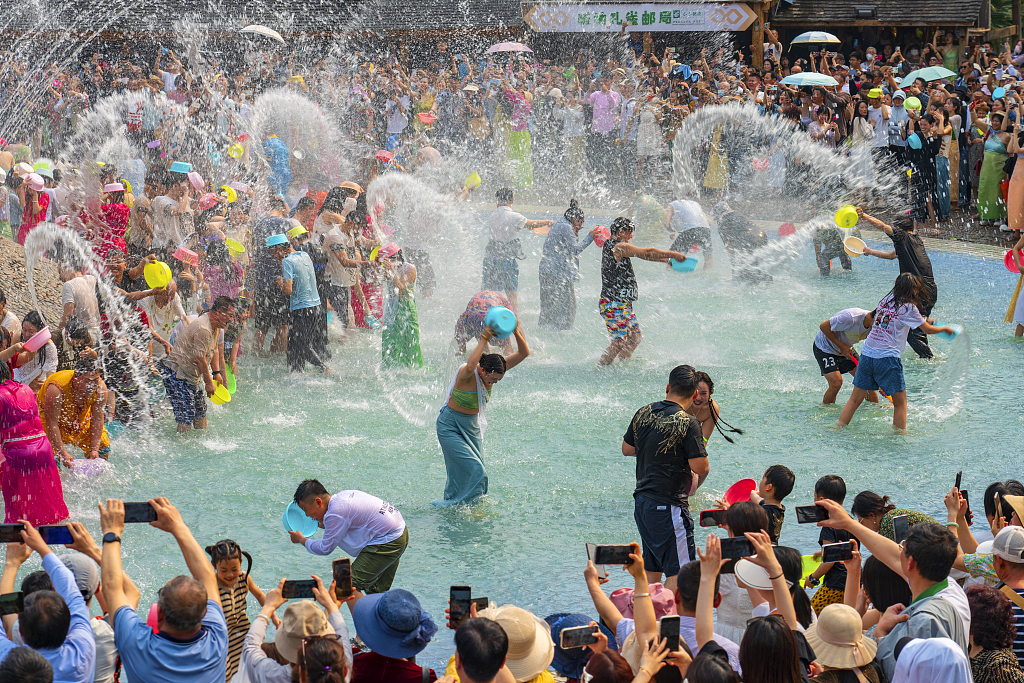


About 71% of Earth’s surface is covered by water. It is no wonder that for centuries, the ‘water element’ has held deep symbolic significance in many cultures around the world. From the playful splashes of Asia to the symbolic rituals in Europe, water is more than just a ‘physical element’. It is a powerful force that transcends boundaries. It is also a spiritual energy that embodies life, purity and harmony.
Discover more from THE EMPTY TALK
Subscribe to get the latest posts sent to your email.